We accept:


 01706 214 233
Creating an account has many benefits: check out faster, keep more than one address, track orders and more.
Before any of what follows is useful, go and check what the 3 cards actually cost today. Memory prices rose sharply through 2026 and the cards with the most VRAM (Video Random Access Memory) took the sharper increases, so the gaps between these tiers have widened and narrowed dependant on how much memory the cards have, and market prices have drifted a long way from where they started. The performance differences below are stable. The price differences aren't, and they're what should decide this.
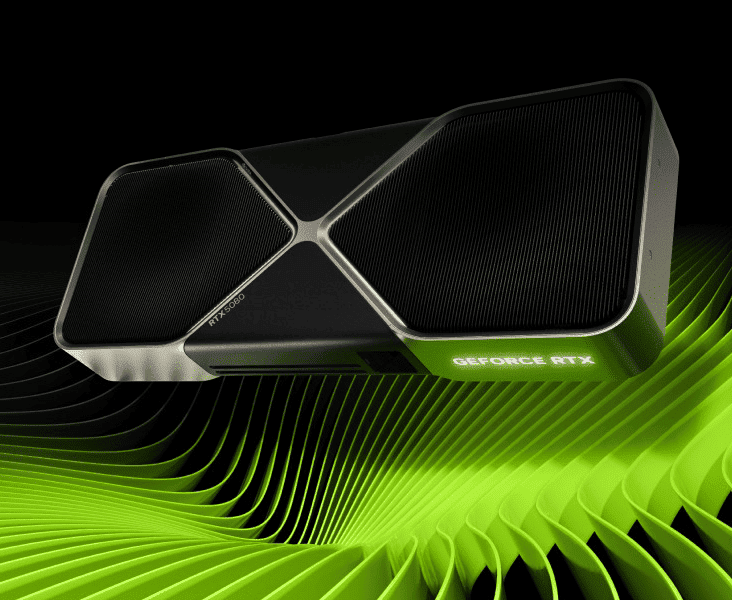
For 1440p the 5070 is enough. For 1440p at high refresh, or 4K with upscaling, the 5070 Ti is the one most people should buy. The 5080 only makes sense if you're targeting native 4K at high frame rates or doing GPU-heavy creative work alongside gaming.
The specifications explain more than the names do.
| Specification | RTX 5070 | RTX 5070 Ti | RTX 5080 |
|---|---|---|---|
| CUDA cores | 6,144 | 8,960 | 10,752 |
| Memory | 12GB GDDR7 | 16GB GDDR7 | 16GB GDDR7 |
| Memory bus | 192-bit | 256-bit | 256-bit |
| Bandwidth | 672 GB/s | 896 GB/s | 960 GB/s |
| Power draw | 250W | 300W | 360W |
| Recommended PSU | 650W | 750W | 850W |
The RTX 5070 Ti has around 32% more cores, a wider memory path, a 1/3 more bandwidth, and 4GB more memory than the RTX 5070. The RTX 5080 has around 20% more cores and more bandwidth than the RTX 5070 Ti, while on the same memory path.
That's because the 5070 is built on a smaller graphics chip than the other two, while the 5070 Ti and the 5080 are the same chip with different amounts of it enabled. Therefore, you can consider the step from 5070 to 5070 Ti crossing a class boundary, while the step from 5070 Ti to 5080 doesn't.
12GB against 16GB is the difference that'll still matter in 3 years, and it deserves more thought than the core counts.
At 1440p, 12GB is fine for the overwhelming majority of current games at high or ultra settings. Testing consistently finds it sufficient there, and anyone telling you the 5070 is crippled at 1440p is overstating it.
At 4K, it's a different conversation, and it gets tighter when you stack things. Ray tracing and high-resolution texture packs cost memory on their own, and frame generation has an overhead of its own, because generating frames needs buffers. Anyone of those is manageable on 12GB. All 3 at once, at 4K, in a recent texture-heavy game, is where the 5070 runs short of memory before it runs short of processing power. Which is a specific and slightly annoying failure mode, because the card has the processing power but has performance issues due to the lack of memory.
If you play at 1440p and expect to keep doing so, 12GB isn't a problem. If you're at 4K, or you keep cards for 4 or 5 years, or you mod heavily, the 16GB on the other cards buys you real headroom.
Published figures for these comparisons vary more than you'd expect, because test suites and settings differ.
For 5070 Ti against 5080, independent testing lands fairly consistently at roughly 10% to 15% at 1440p, widening a little at 4K. That's a real difference and a small one, and it isn't the gap the tier names imply.
For 5070 against 5070 Ti, the reported spread is wider, with figures ranging from the mid-10% to the high-20% depending on who tested and where. Most detailed testing puts it around 20% at 1440p and more at 4K, where the wider memory bus does more work. Treat any single number you see with some caution, including that one.
The reliable takeaway isn't a percentage, it's the shape. The first step is bigger than the second, so if you're deciding where to spend, moving from a 5070 to a 5070 Ti buys you more than moving from a 5070 Ti to a 5080 does.
RTX 5070: if you play at 1440p, want high settings, and the budget is the binding constraint. It'll hold well over 100fps in most current games at that resolution, and it handles 4K with upscaling in games that aren't especially demanding. The 12GB is the compromise and it's a fair one at this price. See RTX 5070 systems.
RTX 5070 Ti: if you want high-refresh 1440p without thinking about settings, or you want 4K to be genuinely viable with upscaling. This is the sensible default for most people building a serious machine, and the 16GB gives it a longer useful life than the 5070. Browse RTX 5070 Ti systems.
RTX 5080: if you're driving a 4K high-refresh display natively rather than leaning on upscaling, or if you render, edit or work with AI models where the extra throughput earns money rather than frames. Look at RTX 5080 systems and the wider 4K gaming range.
One thing applies to all 3. Make sure your monitor can handle the extra fps; a monitor with a lower refresh rate than the fps the system can produce, is just wasting those frames. A 5080 behind a 1080p 60Hz screen is money burnt, and a 5070 behind a 4K 144Hz panel will spend its life with settings turned down.
Which brings it back to where this started. Always use the current day’s market pricing rather than assuming the pricing that was good 1-2 months ago still is. If the 5080 price is sitting 40% above the 5070 Ti for 15% more performance, that answers itself, but if the gap narrows, the answer changes.
It applies in the other direction too, and this is the more useful half. If a 5070 Ti build costs only a little more than a 5070 one, take it, because that's the step worth paying for.
You can compare complete systems across the RTX 50 series range, or set the card against the rest of the build yourself in the PC configurator.
What to read next


