We accept:


 01706 214 233
Creating an account has many benefits: check out faster, keep more than one address, track orders and more.

| PC | Price | Reason |
| Fierce Forge M Gaming PC | £1,199.95 | Clears Recommended comfortably. The entry point for 1080p high settings. |
| Fierce Abyss Gaming PC | £1449.95 | 16GB of VRAM. The step that matters if you’re playing at 1440p. |
| Fierce Accelerator Gaming PC | £1,849.95 | 1440p capable and upgradable with AMD's AM5 socket. |
| Fierce Fractured Gaming PC | £2,399.95 | 4K capable, with room to keep the settings up. |
| Fierce Opulence Gaming PC | £3,099.95 | X3D CPU & 4K maxed, and headroom for whatever comes after this. |
Cities: Skylines II is the only other thing we sell for that asks this much of a processor. Forza Horizon 5 is the driving equivalent, and Total War: Warhammer and Age of Empires IV share the same CPU and memory demands.
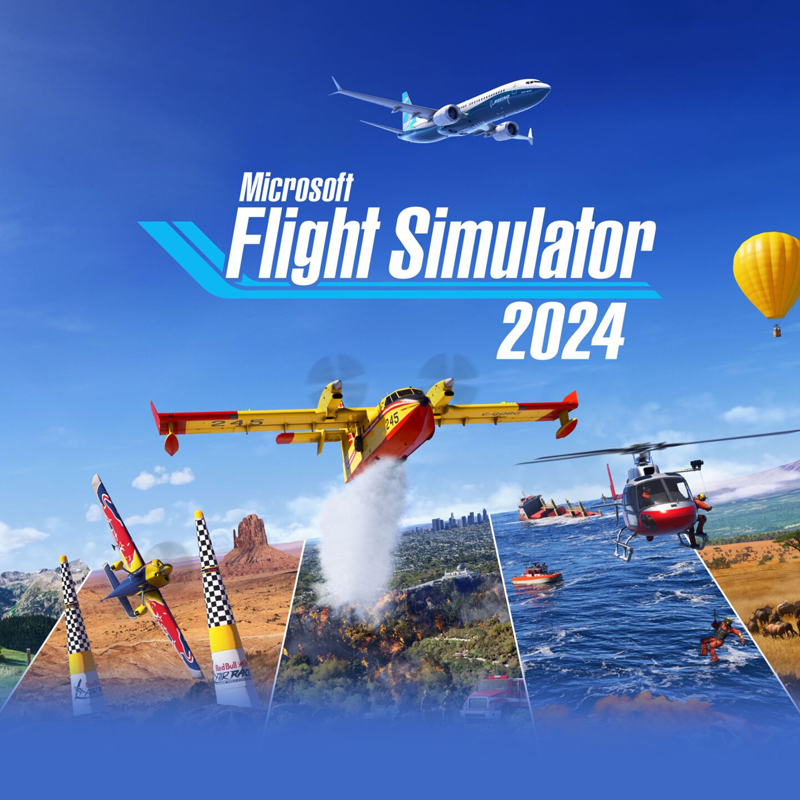
The selected pre-configured systems above are recommended for gameplay and any guarantee of actual performance is neither implied nor stated. Game not supplied. Fierce PC does not have any association with Microsoft Flight Simulator or Asobo Studio and all images are purely for representational purposes only.

All our gaming PCs undergo intense benchmarking, stability testing and quality control procedures before being shipped to the customer.

We ship have shipped over 70,000 systems across the UK. All our staff have a passion for gaming, so we truly understand how important your new gaming PC is to you.

The team at Fierce have been building PCs for over 30 years. We are focused on providing an outstanding customer experience to each and every single customer who chooses to buy their gaming PC from us.

Our pricing is competitive, but if you find a cheaper PC elsewhere with an equivalent specification, please get in touch with us and we will try to beat it.
When shopping for your new gaming PC to handle certain games or your requirements, you need a partner with gaming and PC experience to advise you and point you in the right direction. Your preferred partner should be extremely knowledgeable and have links in the market that can get you the most recent components in the shortest time possible.
That partner is Fierce PC. Here are a few more reasons why you should get your new gaming PC from us.
Included below are the confirmed PC system requirements released by Asobo Studio for Microsoft Flight Simulator 2024.
Minimum Requirements
Recommended Requirements
Ideal Configuration
Choosing or building a PC for Microsoft Flight Simulator 2024 requires careful component selection. While MSFS 2024 offloads more world streaming data to the cloud compared to its predecessor, it remains extremely demanding on local hardware.
Some of the parts that you should prioritise when building your Microsoft Flight Simulator 2024 include:
The processor, or CPU, is essentially the brain of your computer and plays a crucial role in running Microsoft Flight Simulator. The CPU handles all the calculations that aren’t related to graphics, such as physics simulations, controlling AI of the air traffic, weather systems, and more. A more powerful processor can handle these tasks more efficiently, leading to smoother gameplay.
Flight Simulator can utilize multiple cores. More cores can mean better multitasking and improved performance, as the workload can be distributed across them.
High-performance CPUs can ALSO generate a lot of heat, especially when running demanding applications like Flight Simulator. Effective cooling is necessary to maintain performance and prevent thermal throttling.
In summary, for Microsoft Flight Simulator, you want a CPU that has a good balance of core count and clock speed, works well with your GPU, and has efficient heat management to handle the game’s demanding simulation tasks. This will ensure a more immersive and enjoyable flight sim experience.
A good PC graphics card is essential for Microsoft Flight Simulator. The game is known for its stunning visuals and detailed landscapes, which require a powerful graphics card to render effectively. The GPU is responsible for rendering the complex and detailed graphics of the game. This includes the aircraft models, terrain, buildings, water effects, and weather systems.
A more powerful GPU will allow you to experience the game with higher resolution and better frame rates, enhancing the overall experience. Additionally, sufficient VRAM is crucial for storing the textures and data needed for rendering the game’s detailed environments.
For the best experience, aim for the recommended or ideal specifications, as they will provide a more fluid and visually impressive gaming session. Remember, the more powerful your graphics card, the more you’ll be able to enjoy the game’s beautiful and realistic scenery.
For Microsoft Flight Simulator, both 16GB and 32GB of RAM can work, but the choice depends on the level of performance you’re aiming for.
16GB of RAM is the recommended amount and can handle the game well under normal conditions. It’s sufficient for a good gaming experience, especially if you’re playing at standard resolutions and settings.
32GB of RAM, on the other hand, provides more headroom for the game to run smoothly, particularly in more demanding scenarios or higher settings. It can help reduce stutters and frame drops, which is beneficial for a simulation game where smoothness is key.
Video comparisons and user experiences suggest that while 16GB may be adequate, upgrading to 32GB can improve performance, especially in terms of reducing micro stutters and ensuring a smoother experience when flying close to the ground or in densely populated areas.
In summary, if you’re looking for the best possible experience and want to future-proof your setup, going for 32GB of RAM would be the better choice. However, if you’re on a budget or don’t require the highest settings, 16GB should serve you well.
Using an SSD (Solid State Drive) for Microsoft Flight Simulator can significantly enhance your gaming experience. SSDs have much faster read and write speeds compared to traditional HDDs (Hard Disk Drives). This means quicker load times for the game, which can be quite lengthy with an HDD.
An SSD can reduce stutters and microstutters during gameplay. This is because the game frequently loads data such as textures and scenery, which an SSD can deliver more rapidly.
With the OS and Flight Simulator installed on an SSD, you’ll likely see a smoother performance not just in the game but in general computer use.
While it’s possible to run the game on an HDD, for the best experience, especially if you’re using add-ons or high-quality settings, an SSD is highly recommended. If you’re considering an upgrade, an NVMe SSD would be ideal due to its even higher speeds compared to a SATA SSD.
Visit our full range of Gaming PCs


