We accept:


 01706 214 233
Creating an account has many benefits: check out faster, keep more than one address, track orders and more.
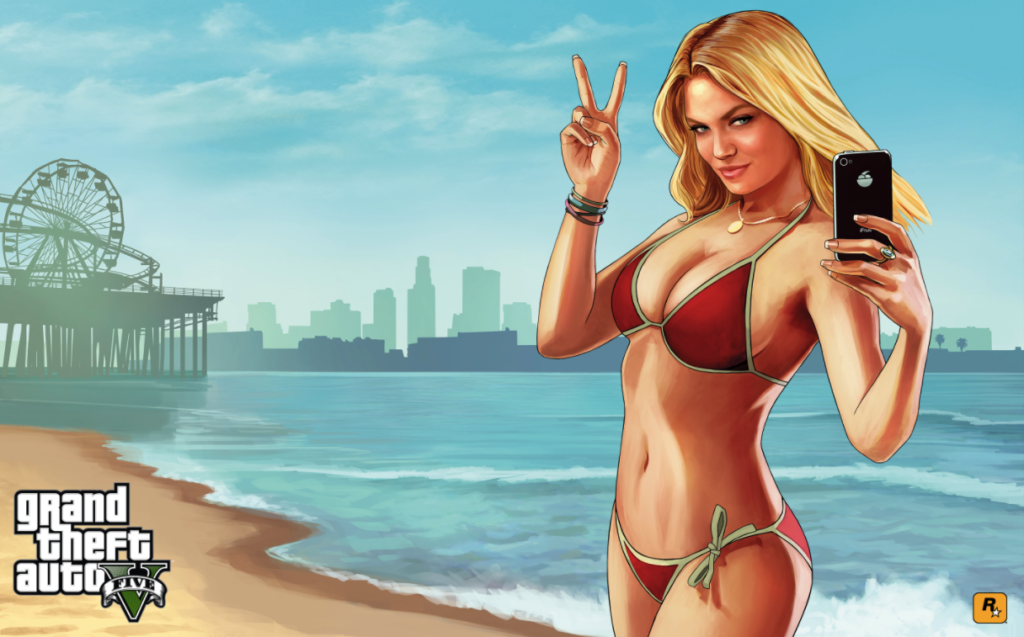
The GTA franchise has had a huge impact on the gaming world. Like every other franchise, it has had its share of back and forth with some less than popular releases. But one thing is for sure. Gamers are always looking forward to the next one.
GTA is unusual because it doesn't follow a single continuous timeline. Each release resets, which is part of why anticipation runs so high every time. Here's the full history of the series in release order, from the top-down original in 1997 to Grand Theft Auto VI.
The one that started it all, released in 1997 for MS-DOS and Windows and reaching North America in 1998. Developed by DMA Design, it had simple top-down graphics and let you loose across three cities that would become series fixtures: Liberty City, San Andreas and Vice City.
Dated now, obviously, but still good fun and a useful reminder of how far the series has come.
The first expansion arrived quickly, released on 31 March 1999 and set in London in 1969. It ran on the same engine with the same mechanics as the original, and it remains the only GTA game set outside the United States.
Available on PlayStation, MS-DOS and Windows.
The second expansion followed on 1 June 1999, set several years earlier in the same city. It plays much like the base game but improved the multiplayer with new modes, and introduced a drive-by mechanic for the first time in the series.
Released on 22 October 1999 and set in Anywhere City, GTA 2 brought new platforms including the Game Boy Color and Dreamcast alongside PlayStation and Windows.
The engine moved to 3D models while keeping the overhead view, and players got new weapons and new enemy types. A transitional game, and better than it is usually given credit for.
Released on 22 October 2001, GTA III is the game that changed everything. It was the first fully 3D entry and swapped the overhead camera for an adjustable third-person one, which made Liberty City feel like a real place rather than a map.
It has since appeared on almost everything: PlayStation 2 and 3, Xbox, Windows, macOS, iOS, Android and Fire OS.
Released on 29 October 2002, just over a year after GTA III, and set in a fictionalised 1980s Miami.
The gameplay didn't change enormously, but the setting and the soundtrack did. Vice City is still one of the most distinctive games in the series, and the graphical improvements gave players a lot more reason to explore.
Released on 24 October 2004 and arguably the high point of the 3D era. San Andreas follows Carl Johnson across three cities, Los Santos, San Fierro and Las Venturas, with genuine wilderness and rural towns in between.
It was so well received that the games which followed struggled to match it. Supported on Windows, macOS, Xbox, PlayStation 2, 3 and 4, and most mobile platforms.
The series took a step back with GTA Advance, released for Game Boy Advance in 2004. Coming straight after San Andreas made it look worse than it was.
A prequel to GTA III, it used 2D graphics and an overhead camera purely because of the hardware, which made it feel like a throwback rather than a step forward.
Released on 24 October 2005, primarily for PSP. A prequel to GTA III, sharing its graphics and city layout but with more streamlined mechanics.
It came to PS3 in 2013 and to iOS, Android and Fire OS between 2015 and 2016.
Released in 2006 and the last of the 3D era. A prequel to Vice City with the same look and feel, but more polished than the original in several respects.
It never made it to modern phones, so PSP, PS2, PS3 and PSN are your only options.
Released on 29 April 2008 for PS3, Xbox 360 and Windows, and the start of the HD era. It gave us the most detailed Liberty City yet and a noticeably more serious tone than San Andreas.
It has never been remastered, and its PC version has a reputation for being awkward on modern hardware, though the community has produced fixes.
The first GTA IV expansion, released in 2009. New protagonist, new storyline, and a heavy focus on motorcycles and the biker gangs of Liberty City.
Released on 17 March 2009 for Nintendo DS and later PSP, iOS, Android and Fire OS. A handheld spin-off focused on the Liberty City Triads, with a semi-adjustable overhead camera and a distinctive cel-shaded look.
The second and final GTA IV expansion, released in October 2009. Brighter, louder and considerably more absurd than The Lost and Damned, following Luis Lopez through Liberty City's nightlife.
Both expansions were later bundled as Episodes from Liberty City and released as a standalone game.
Released on 17 September 2013 and one of the best-selling games ever made. GTA V returned to Los Santos with three playable protagonists, Michael, Franklin and Trevor, whose stories intersect throughout.
The PC version followed in April 2015, and the game has since been rereleased for PS5 and Xbox Series X and S. More than a decade on, it is still played daily by millions of people, which is not something you can say about many games.
Launched in October 2013 as GTA V's multiplayer component and quickly became a game in its own right. Regular updates have added heists, businesses, vehicles and entire islands over the years.
It is the main reason GTA V has stayed relevant for as long as it has, and it is where most GTA players now spend their time.
Released in November 2021, bundling remastered versions of GTA III, Vice City and San Andreas.
The launch was rough and the reception was poor, though subsequent patches improved things considerably. Worth knowing that the originals were pulled from sale when this released, so it is now the easiest way to play the 3D era games legitimately.
Announced in 2022 and due on 19 November 2026, thirteen years after GTA V and the longest gap in the series by some distance.
GTA VI is set in Leonida, a fictionalised Florida, and returns to Vice City. It follows a criminal couple, Jason Duval and Lucia Caminos, and marks the first time the series has had a female protagonist.
One thing PC players should know: the November release is for PlayStation 5 and Xbox Series X and S only. Rockstar has not announced a PC version or a date for one. If GTA V is any guide, and its PC release came eighteen months after console, there may be a wait.
The older games in this list will run on anything. Everything up to and including San Andreas is more likely to need a compatibility fix than a better graphics card.
GTA V is the one worth planning around. It is well optimised for its age and runs comfortably on modest hardware, but the online mode with a full lobby leans on the processor, and mods can change the picture entirely.
GTA VI is the unknown. No PC requirements have been published, and there is no point guessing at them before Rockstar does. What is reasonable to assume is that it will ask for considerably more than GTA V, and that anyone buying a machine now with GTA VI in mind should be looking at the upper end rather than the entry point.
Nearly thirty years and eighteen games, and the series has reinvented itself several times over. Playing them in release order is the best way to see that happen, though you could equally start at GTA V and work backwards.
See the machines we recommend on our GTA V gaming PC page, or build your own with our online configurator.